
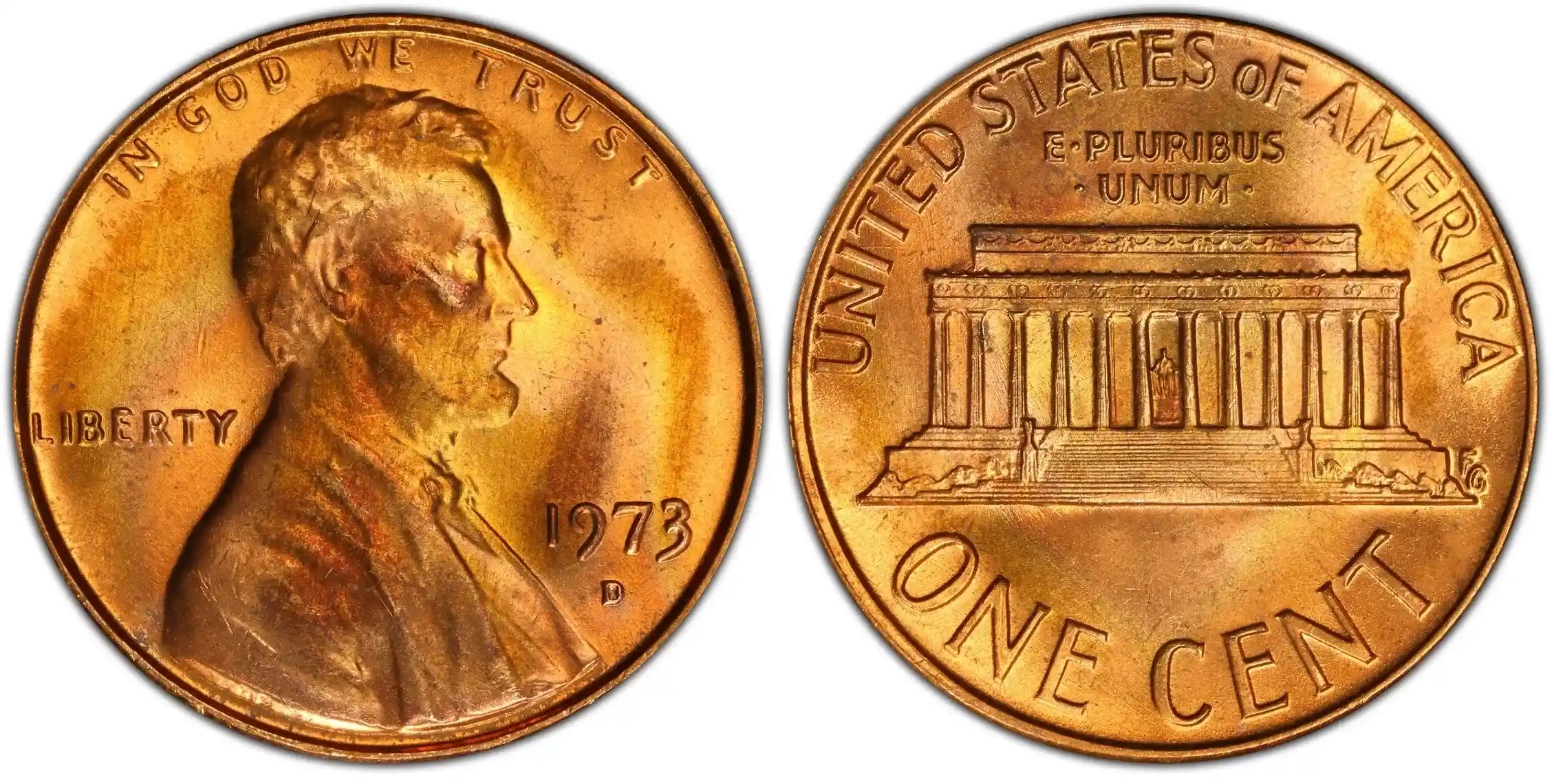
A standard Denver mint 1973 copper penny in worn condition has a minimum price range from $0.01 to $0.05. Coins in average condition without wear show a market value range from $5 to $15.
Rare specimens in superior condition demonstrate market 1973 D penny value from $400 to $800.
Coin Parameter | Actual Value |
Metal Composition | 95% copper 5% zinc |
Coin Mass | 3.11 grams |
Edge Type | smooth rim |
Total Mintage | 3,549,576,588 pieces |
Production Site | Denver Mint |
Coin mass equals exactly 3.11 grams. Copper alloy provides high item durability.
Market metal price dynamics for the last three years show under 36% change. Standard market metal price in one coin stays around $0.03.
Zinc content prevents surface oxidation. Huge mintage makes regular specimens accessible for buyers.
Price by Grade
Coin condition grade determines final market price at auctions. Professional grading allows accurate price range settings for each specimen.
Coin Grade | Color Designation | Real Price Range |
MS63 | Brown | $1 - $3 |
MS63 | Red | $5 - $10 |
MS65 | Brown | $5 - $12 |
MS65 | Red | $12 - $25 |
MS66 | Red | $25 - $50 |
MS67 | Red | $100 - $400 |
MS67+ | Red | $800 - $1200 |
MS68 | Red | $4000 - $4994 |
Record price sits at $4994 for a specimen in MS67 Red grade at Heritage Auctions. This deal happened in February 2014.
Sales of MS67+ Red grade coins in recent times show stable value around $990. Value difference between neighbor grades reaches hundreds of %.
Investors must check coin grade before deal completion.
How to Determine Coin Grade
Condition determination requires surface inspection under good light using coin-identifier.com. Main condition categories appear below.
Circulated Condition
Owner discovers heavy pattern detail wear. Price of such coins stays from $0.01 to $0.05.
Lincoln portrait loses fine hair details. Fields contain numerous deep scratches and marks. Original strike luster stays absent on both sides.
MS63 or Choice Uncirculated Condition
Coin preserving initial luster on most surface areas looks attractive. Market worth ranges from $2 to $10.
Fields show small scratches and contact marks from other coins in bags. President portrait remains sharp without wear. Small dark spots on copper surface show acceptance. Detail strike possesses average sharpness.
MS65 or Gem Uncirculated Condition
Specimen possesses strong attractive luster. Average price stays within $12 to $25 range.
Presence of several minor defects on secondary image details shows acceptance. Coin fields look clean without deep scratches. Surface color must look red or red-brown.
MS67 or Superb Gem Uncirculated Condition
Coin looks flawless during visual inspection. Sale price accounts for $100 to $400.
Microscopic defects appear only under strong magnification. Strike distinguishes itself by high detail sharpness. Original red luster covers surface uniformly.
Such specimens appear rarely among Denver mint coins of this issue.
Minting Errors and Value Impact
Minting errors increase final coin price significantly.
Standard penny turns into valuable numismatic object upon production defect presence.
Off-Centre Strike
Defect arises during incorrect blank placement in printing press. Price of coin with 10% offset equals $5 to $20. Upon 50% image offset with date preservation value grows to $150.
Double Strike
Coin undergoes repeated stamp strike with blank displacement. Value of such defect varies from $50 to $250. Price depends on second date and Lincoln portrait sharpness.
Die Crack
Defect arises from press working surface destruction during operation. Coin features convex metal line.
Value of minor cracks amounts to $2 to $10. Large cracks passing through important drawing elements equal $50.
Such defects show up easily without special equipment.
Clipped Planchet
Defect appears at blank cutting stage from metal strip. Coin features characteristic semicircular cut on edge.
Price of specimen with one small cut equals $10 to $30. Presence of several cuts raises value to $100.
Defect authenticity confirms by characteristic rim smoothing opposite cut.
Real Value Loss Examples and Storage Rules
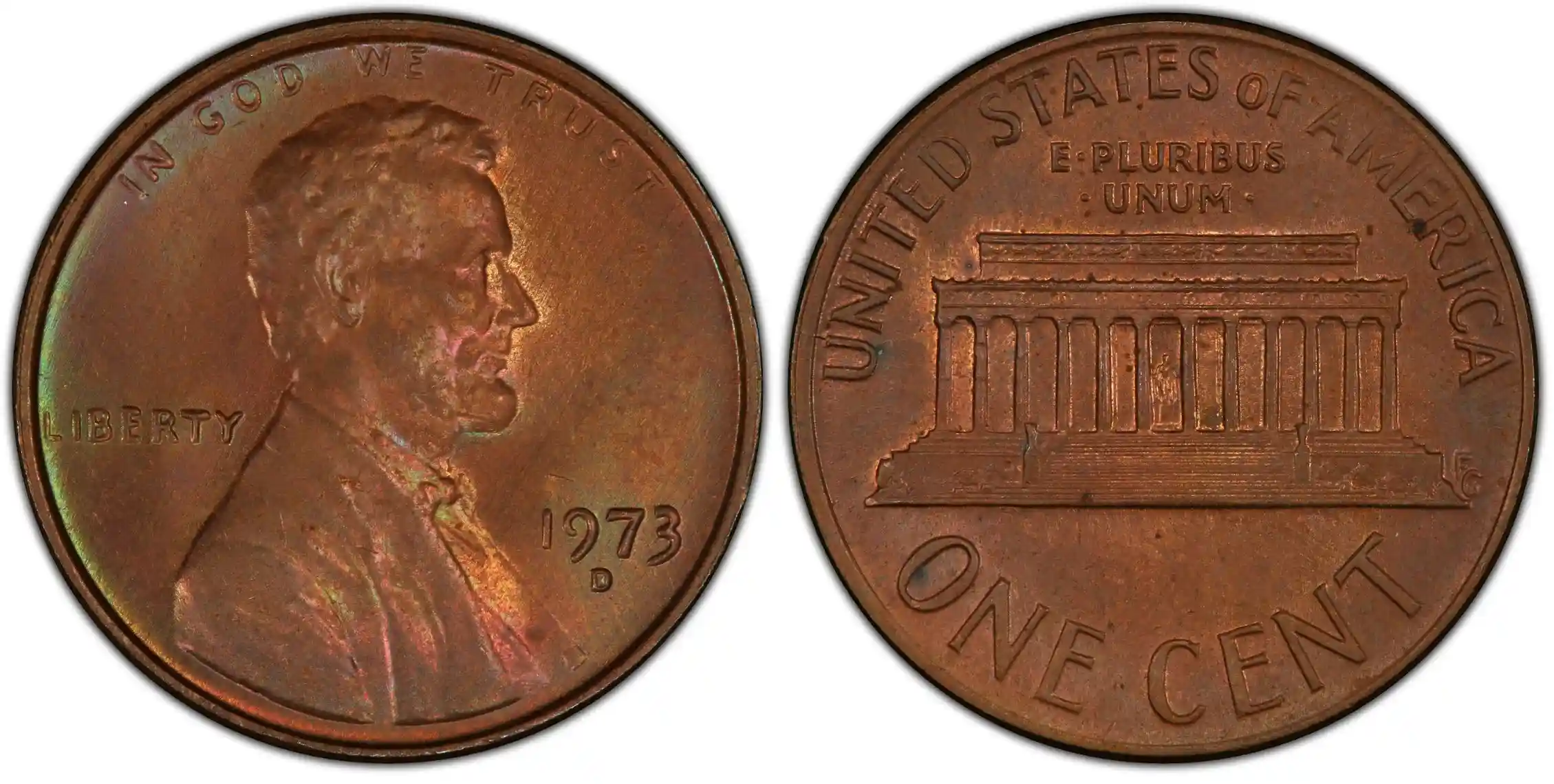
Incorrect storage leads to catastrophic market price drop. Consider real example from auction practice.
Owner stored 1973-D penny collection in standard polyvinyl chloride plastic album. Plastic chlorine entered chemical reaction with copper over ten years.
Surface features formed sticky green layer destroying original red luster. Coin grade dropped from expected MS66 level to details with corrosion.
Real collection value dropped from $200 to copper scrap price. Strict rule adherence prevents such financial losses.
Safe Coin Storage Rules
For metal spoilage risk minimization use specialized materials. Main coin protection means appear below.
Non-PVC special holders
Individual paper envelopes
Airtight plastic capsules
Dry dark room
Fabric glove usage
Recommendation adherence guarantees coin condition safety. Bare hand touch leaves grease traces turning into dark spots over time.
Coin Defect | Damaged Coin Value | Ideal MS65 Coin Value |
Acid cleaning traces | $0.05 | $15.00 |
Tweezer scratches | $0.10 | $15.00 |
Moisture corrosion traces | $0.03 | $15.00 |
PVC green layer | $0.03 | $15.00 |
Fingerprints on field | $0.50 | $15.00 |
Independent coin cleaning attempt using chemical means destroys numismatic value completely. Auction buyers recognize artificially cleaned specimens easily and refuse bidding.
Tips for Increasing Sale Price
Every seller seeks maximum profit during coin realization. Simple step adherence raises total deal price.
Professional Coin Appraisal
Coin submission to grading companies increases buyer trust. Certified coin sells two or three times higher than uncertified analog.
Buyers pay high price for guaranteed grade. Appraisal services cost money, so certify coins in state above MS65 only. For cheaper specimens certification costs exceed coin market value.
Quality Macro Photography for Auctions
Detailed photos without glare attract more auction participants. Good lighting highlights original red copper surface luster.
Blurry shots lower lot final price by 50%. Buyers fear hidden defects and avoid lots with bad images. Professional tripod usage prevents frame blurring.
Selection of Right Trading Platform
Specialized numismatic auctions give best price for rare grades. Ordinary coins sell better on popular internet platforms.
Platform commission requires accounting during net profit calculation. Sales history study of similar lots helps set right starting price.
Right auction end time selection increases final deal sum.
Investment Recommendations
1973-D penny purchase requires clear market mechanism understanding. Investors should purchase coins with confirmed grade from leading expert agencies only.
Rare mint error search in unopened bags of past issues brings high profit.
Purchase of such bags involves overpicked material buying risk. Market analysis before every deal guarantees invested capital safety.